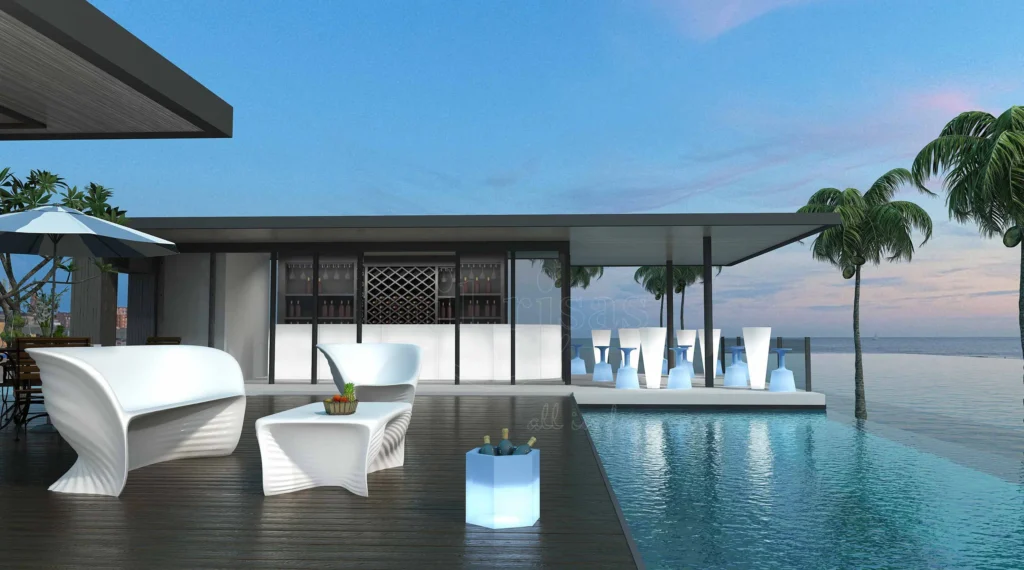
Why do our LED glow chairs withstand years of outdoor weather while maintaining seamless lighting? The answer lies in the rotational molding process—a manufacturing technique that creates strong, hollow plastic products without welds or joints.
At Mil Risas, we specialize in premium LED furniture that combines aesthetic appeal with industrial durability. The rotational molding process (also known as rotomolding) is the cornerstone of our production, enabling us to create large, complex shapes perfect for embedding LED lighting systems.
In this comprehensive guide, we’ll break down the rotational molding process from fundamental principles to practical applications, explaining why it’s ideal for premium LED furniture manufacturing.
What is the Rotational Molding Process?
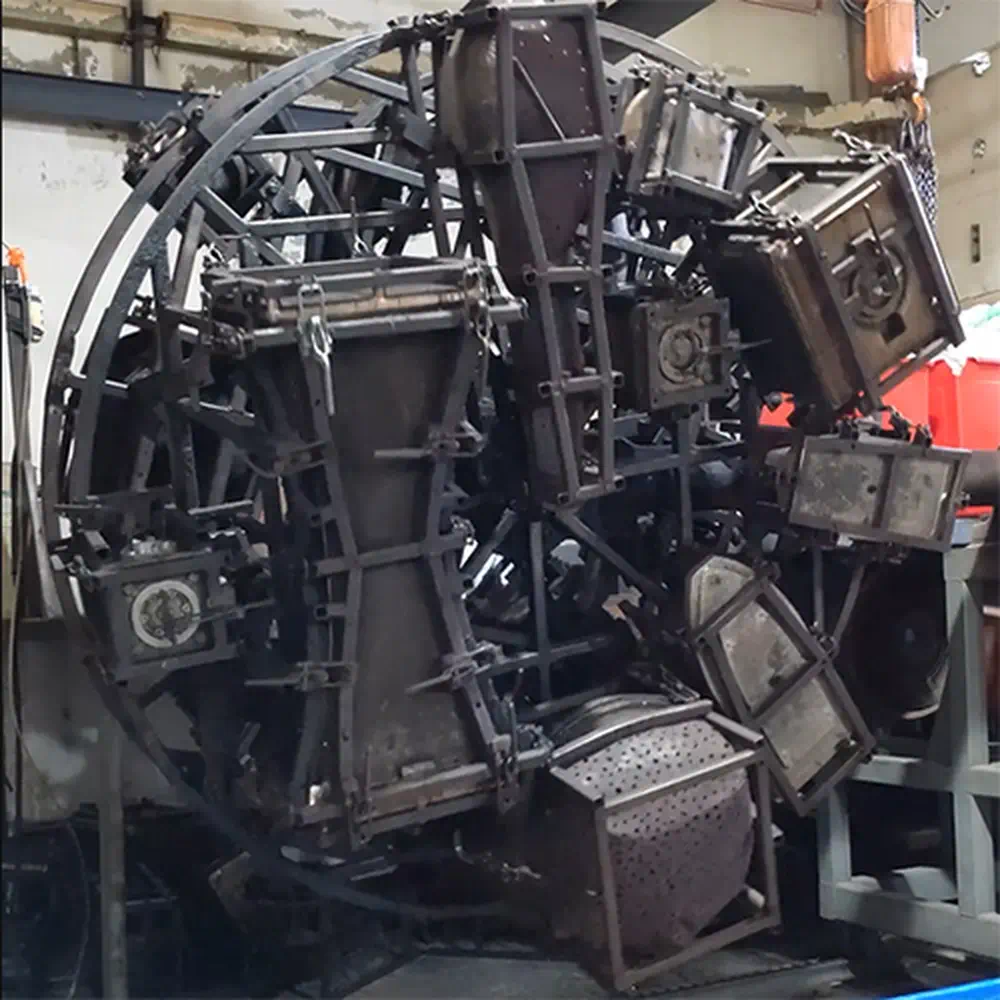
The rotational molding process is a specialized plastic forming technique that produces seamless, hollow plastic products. Unlike injection molding or blow molding, rotomolding uses centrifugal force and heat to distribute plastic powder evenly inside a rotating mold.
A Brief History
Developed in the 1940s, rotational molding initially produced doll heads and toys. Learn more on Wikipedia. Today, it’s a multi-billion dollar global industry powering everything from kayaks and playground slides to industrial tanks and—most importantly for us—premium LED furniture.
Key Characteristics:
Creates single-wall, hollow structures
Uniform wall thickness throughout
No internal stress or weld lines
Excellent for large, complex shapes
Core Principles of the Rotational Molding Process
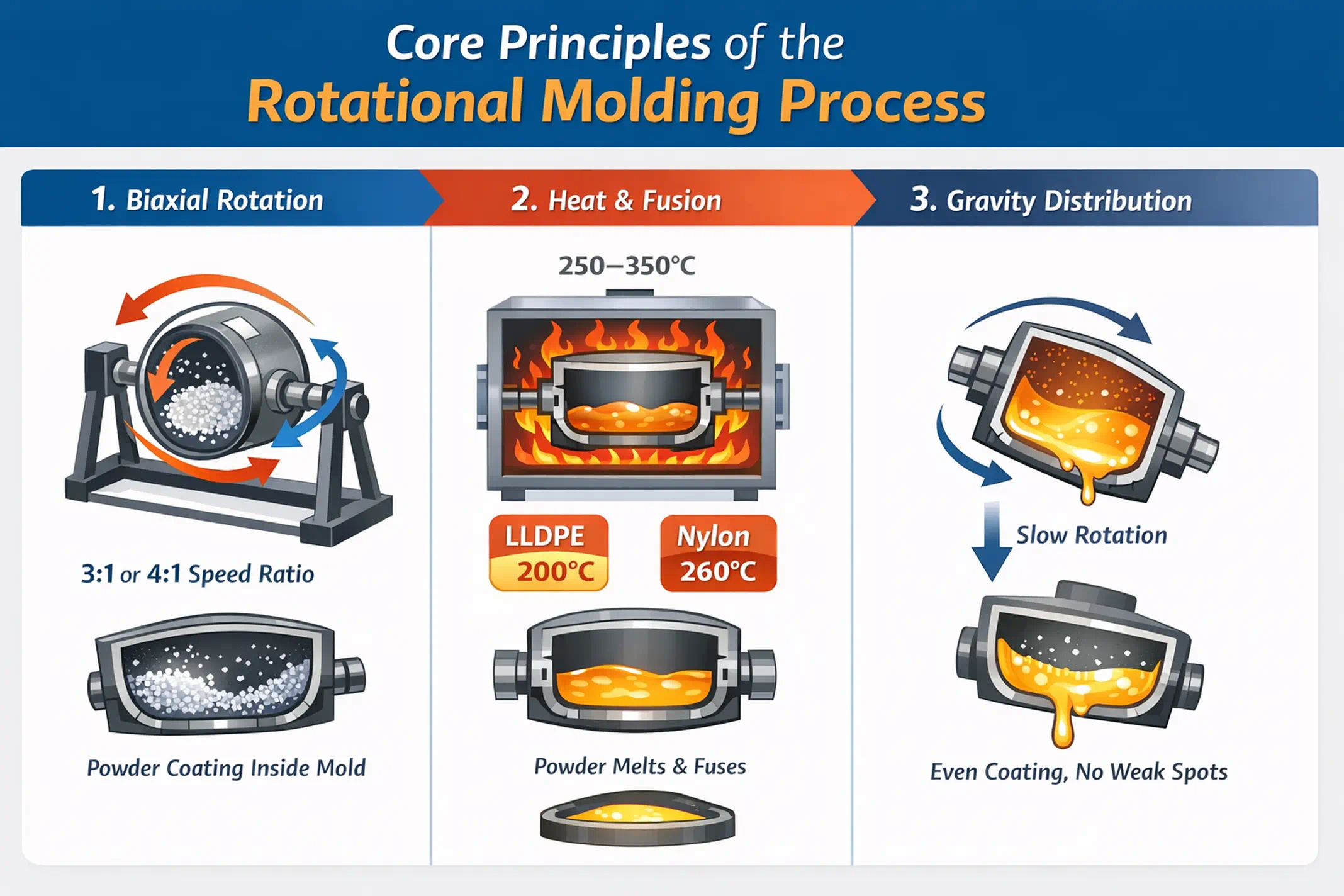
Understanding the rotational molding process requires grasping three fundamental principles:
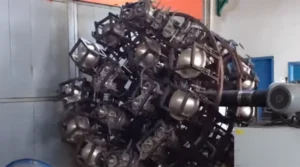
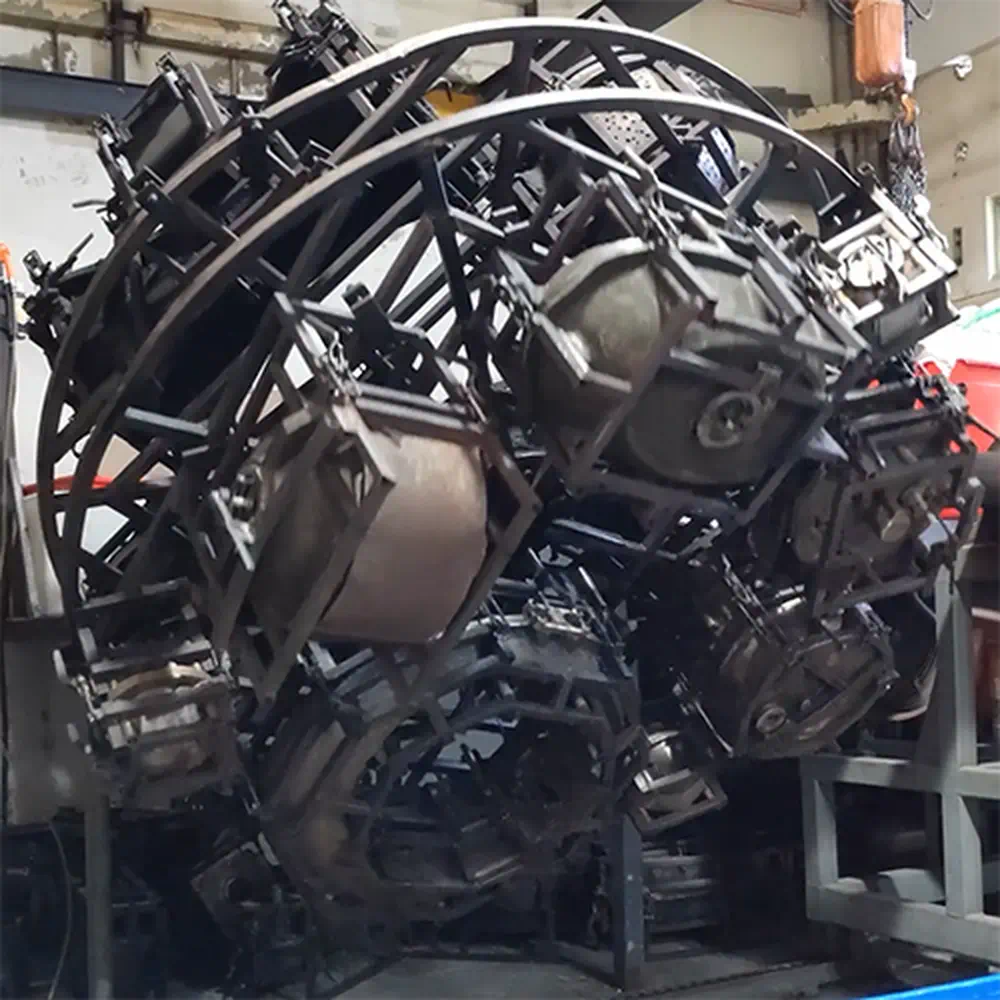
Biaxial Rotation
The mold rotates simultaneously on two axes (typically with a 3:1 or 4:1 speed ratio):
Major axis: Main rotation (similar to a rotisserie)
Minor axis: Secondary rotation (perpendicular tilt)
This biaxial rotation creates the signature “pearl” effect, where plastic powder gradually coats every interior surface evenly.
Heat and Fusion
Heating phase: Industry-standard range of 250–350°C
Plastic powder melts, flows, and fuses into a continuous, stress-free layer
Fusion temperature varies by material (for example, LLDPE around 200°C, nylon around 260°C)
Gravity Distribution
Unlike pressure-based processes, rotomolding relies on gravity and slow rotation to distribute molten plastic, eliminating thin spots and weak areas. This natural distribution of material is one of the key advantages of rotational molding over other plastic forming techniques.
The Complete 8-Step Rotational Molding Process
Here’s exactly how we execute rotational molding at Mil Risas with LED-specific optimizations:
Step 1: Mold Preparation
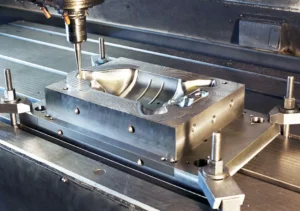
Precision cast aluminum molds cleaned and preheated to 60°C
Vent holes installed for optimal air escape
LED mounting points pre-installed for lighting integration
Step 2: Material Loading
Powdered resin loaded at 20–40% of final part volume (industry standard)
Mil Risas advantage: Custom ratios for your exact weight requirements
Available materials: UV-stabilized LLDPE – HDPE – MDPE – X-PE – PP
Step 3: Mold Closing & Sealing
Mold halves bolted with precision alignment pins
Perfect seals prevent powder leakage (critical for LED furniture)
Double-checked for airtight integrity
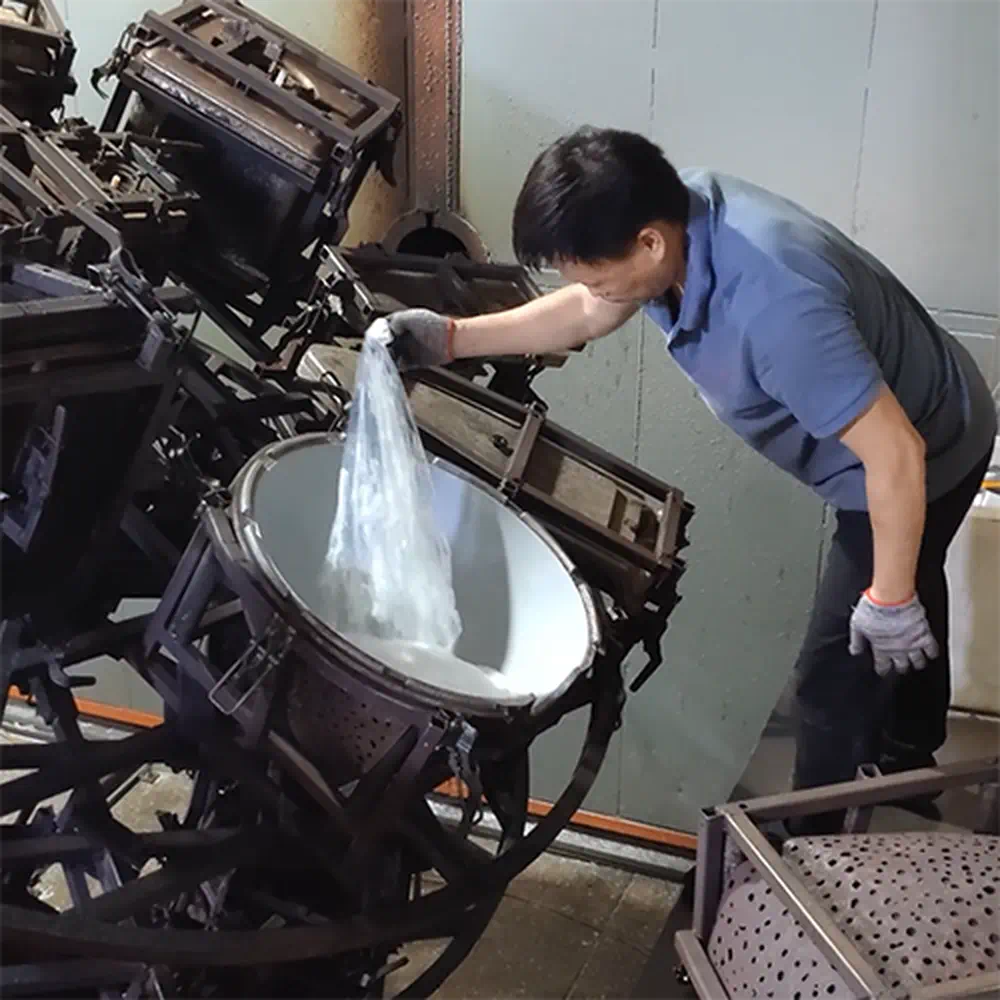
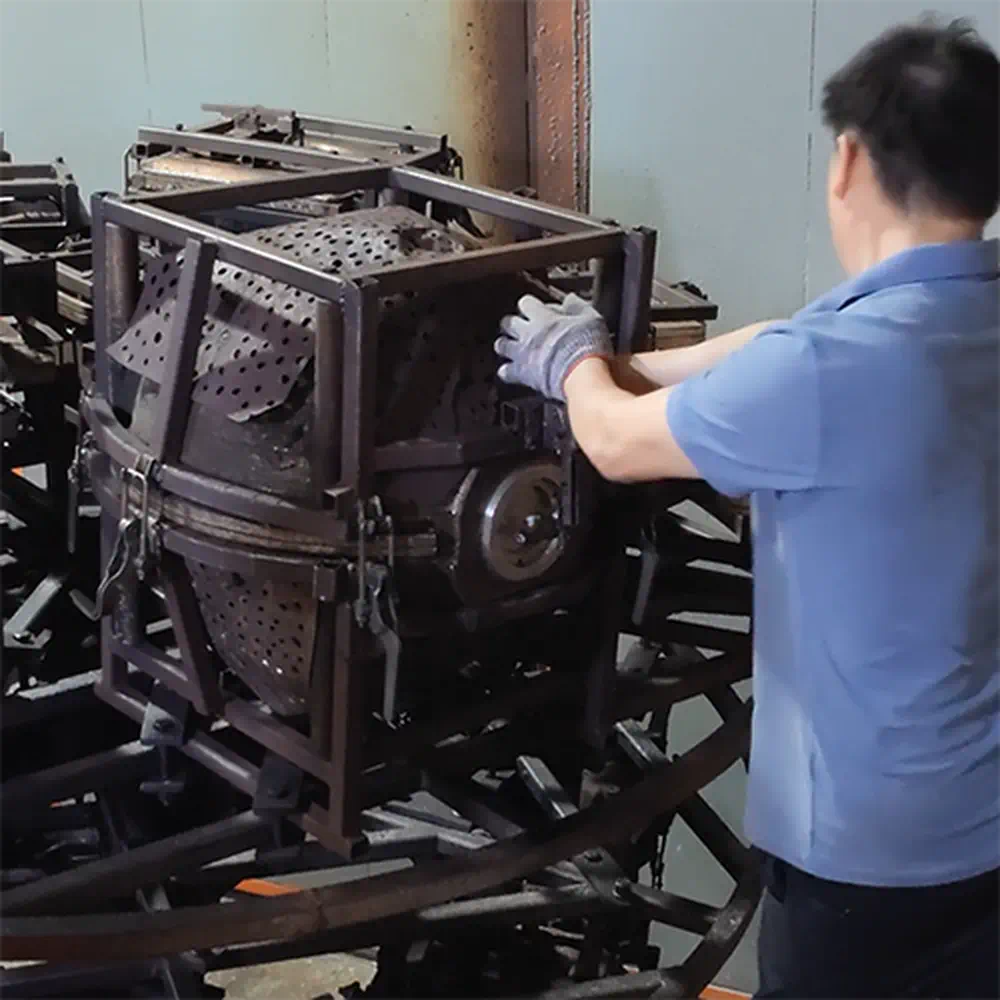
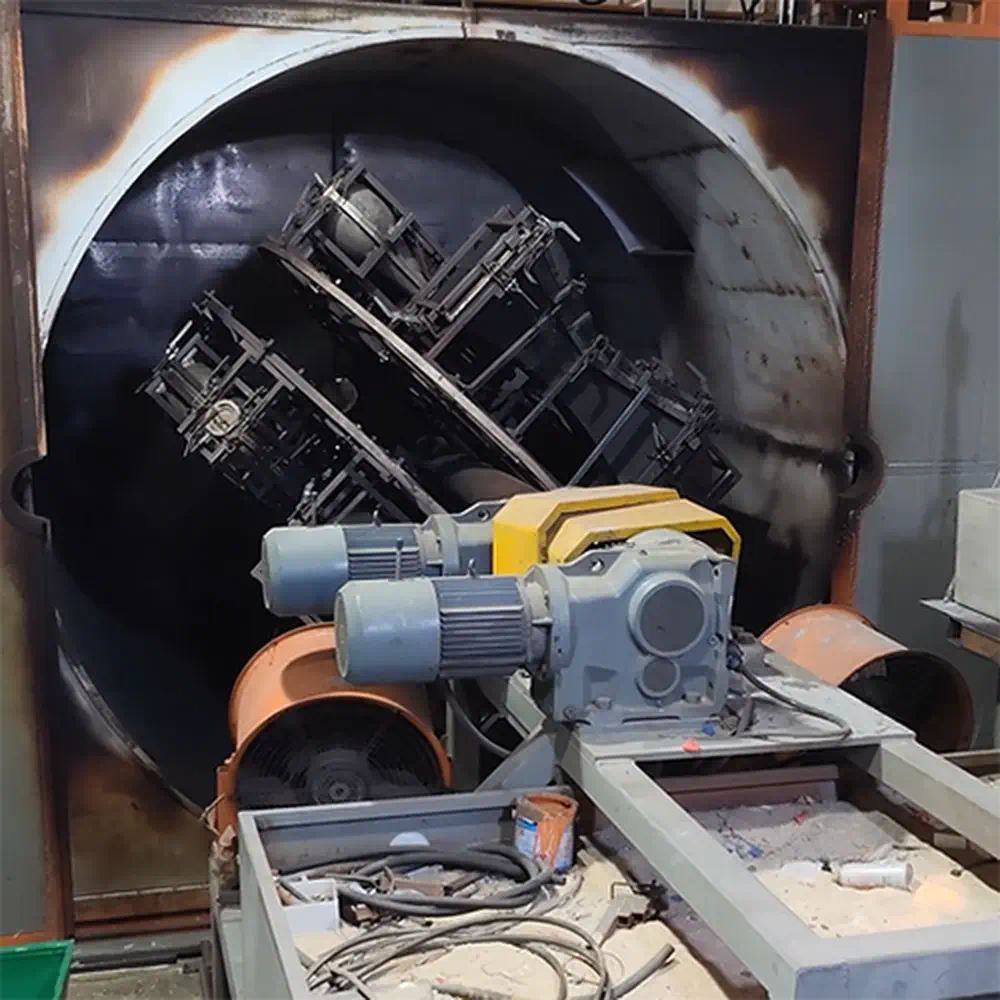
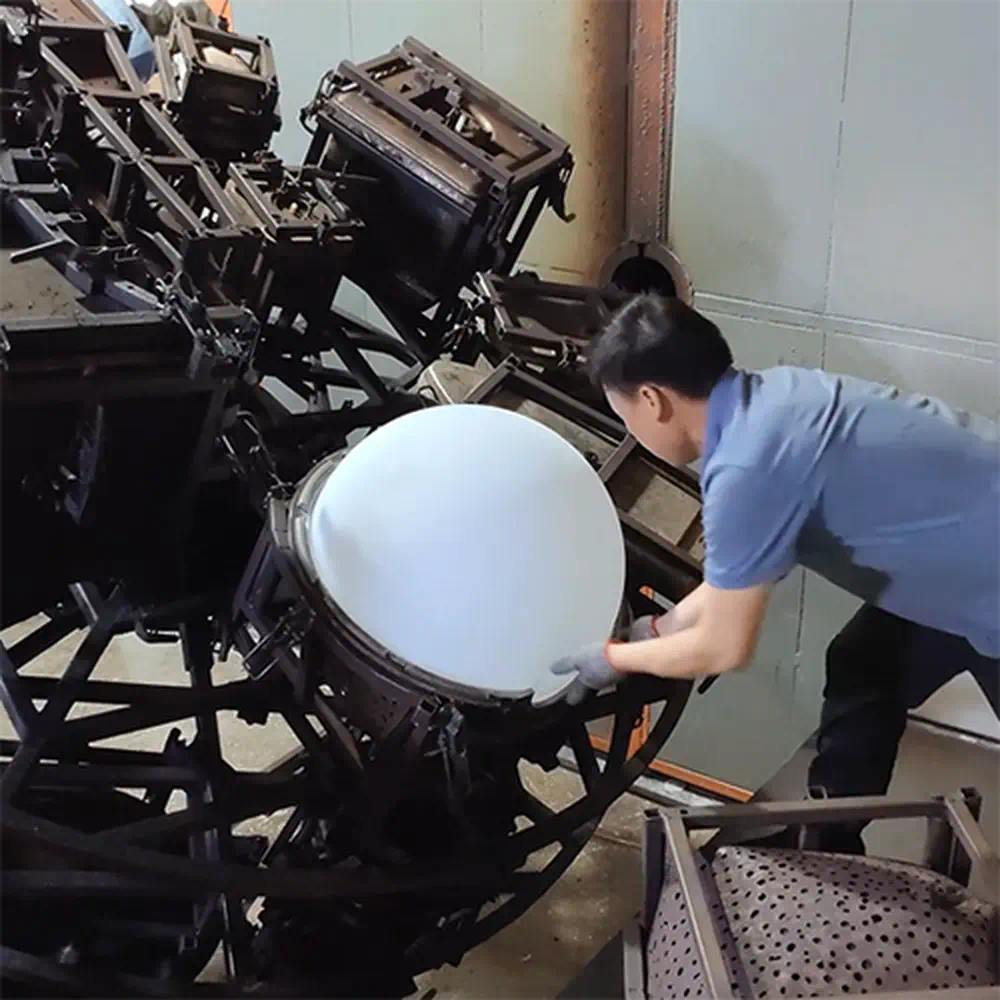
Step 4: Oven Loading & Biaxial Rotation
| Parameter | Range |
| Oven Temperature | 250–350°C (LLDPE standard) |
| Main Axis Speed | 6–15 RPM |
| Secondary Axis Speed | 2–6 RPM (3:1 ratio typical) |
| Heating Time | 20–45 minutes (large parts) |
Biaxial rotation ensures perfect plastic distribution in the preheated oven.
Step 5: Melting & Fusion Phase
Plastic powder fully melts and flows to coat all mold surfaces
Forms a seamless shell with uniform thickness (4–8mm average)
Mil Risas optimization: Perfect for waterproof LED strip integration
Step 6: Cooling Phase
Air-cooled first to prevent warping and ensure dimensional stability
Water spray cooling accelerates cycle time by 30%
Multi-stage cooling controls contraction rate for perfect LED alignment
Step 7: Demolding
Mold opened with hydraulic assist for precision
Part extracted and inspected for wall thickness uniformity
LED mounting points verified for perfect fit
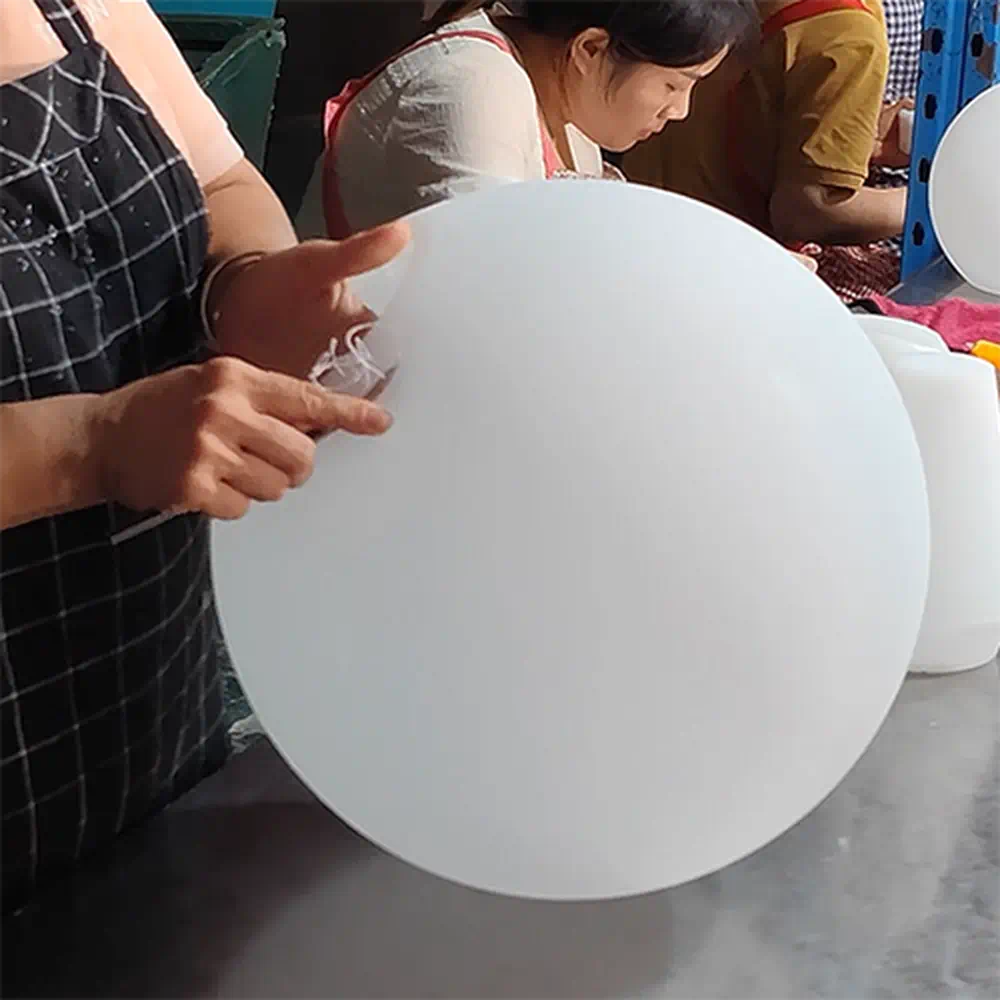
Step 8: Quality Control & Trimming
Flash removal with precision manual trimming
Surface inspection for premium seamless finish
Pre-assembly fit check for all lighting components
Complete cycle: 45–90 minutes per large part (industry standard)
Why Rotational Molding Excels for LED Furniture
| Feature | Rotational Molding | Injection Molding | Blow Molding |
| Wall Thickness | ✅ 4–8mm uniform | ⚠️ Variable | ❌ Uneven |
| Max Size | ✅ >2m pieces | ❌ <0.8m | ⚠️ Medium |
| Complex Shapes | ✅ Excellent | ✅ Good | ❌ Limited |
| Tooling Cost | ✅ 1/4–1/10 | ❌ High | ⚠️ Medium |
| LED Integration | ✅ Seamless IP65+ | ⚠️ Post-process | ❌ Difficult |
LED-Specific Benefits
IP65+ waterproofing for outdoor RGB lighting
Pre-formed LED channels molded in one step
Natural corner reinforcement for structural strength
UV-stabilized materials maintain color vibrancy long-term
Mil Risas’ Process in Action
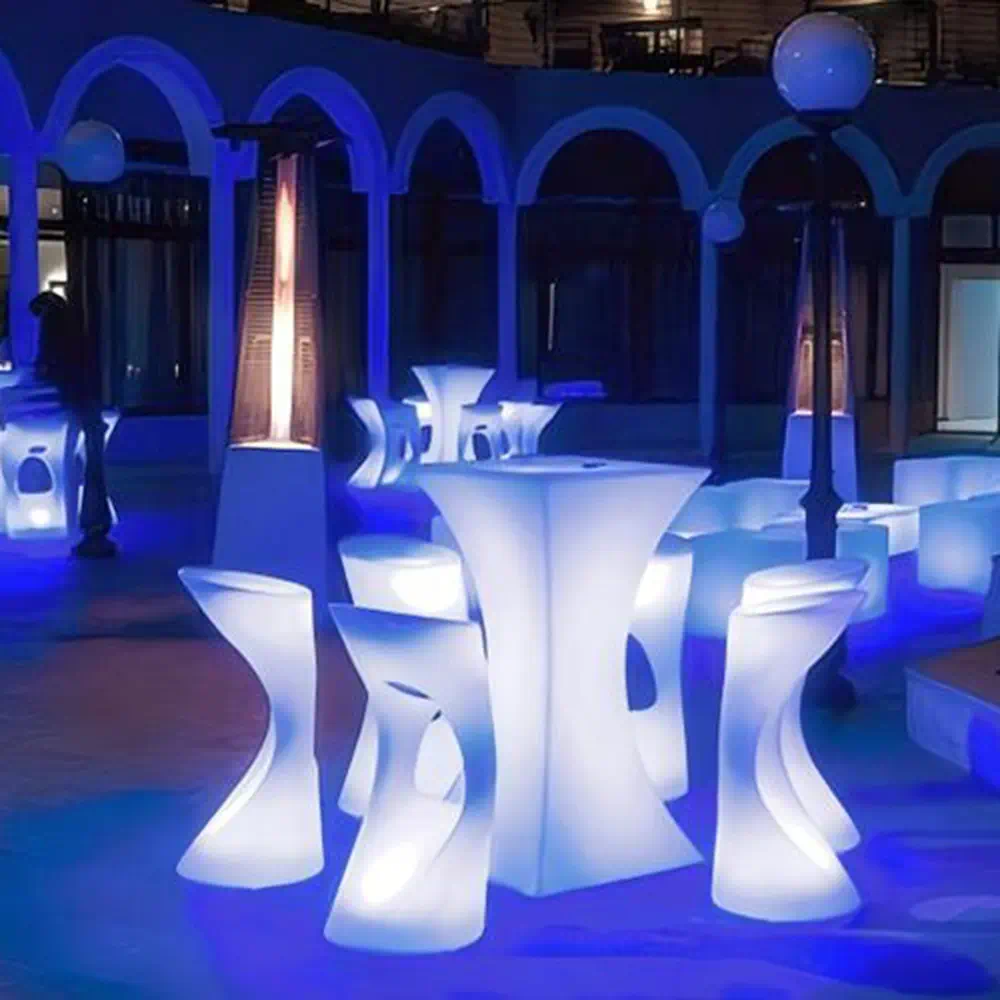
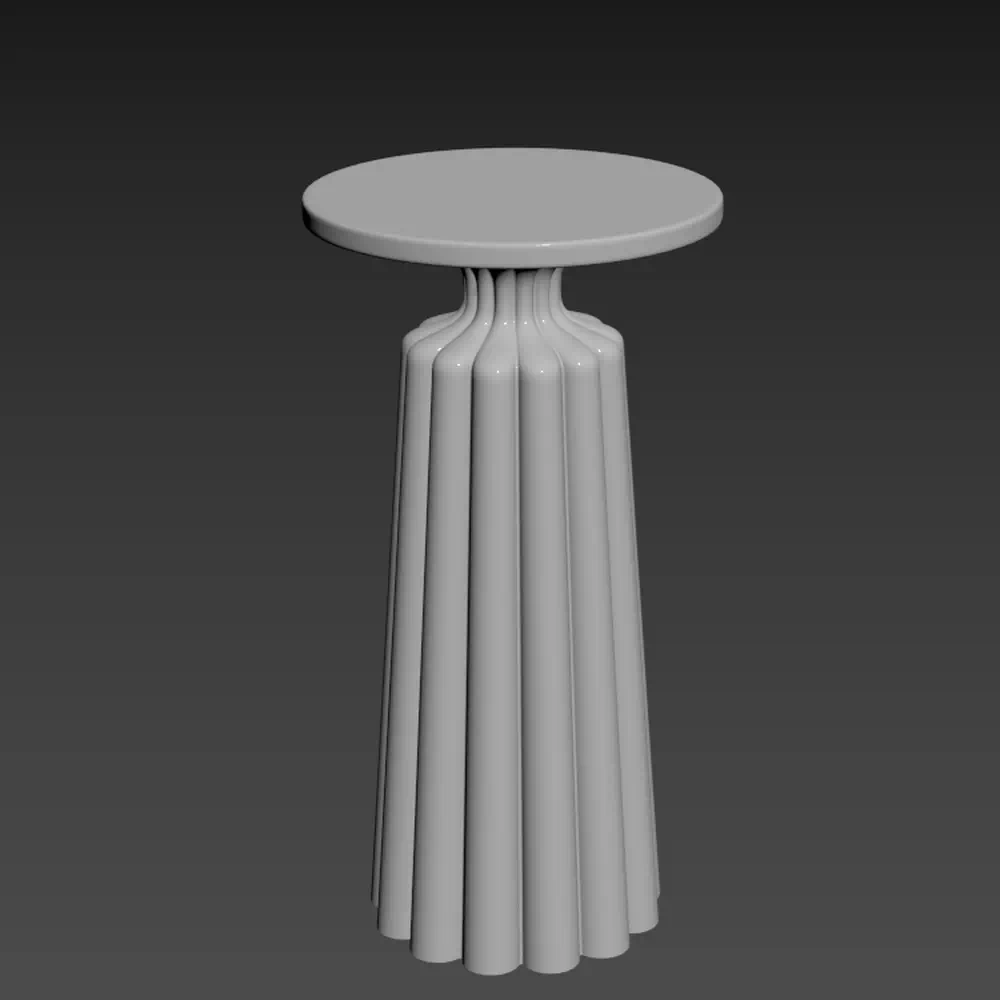
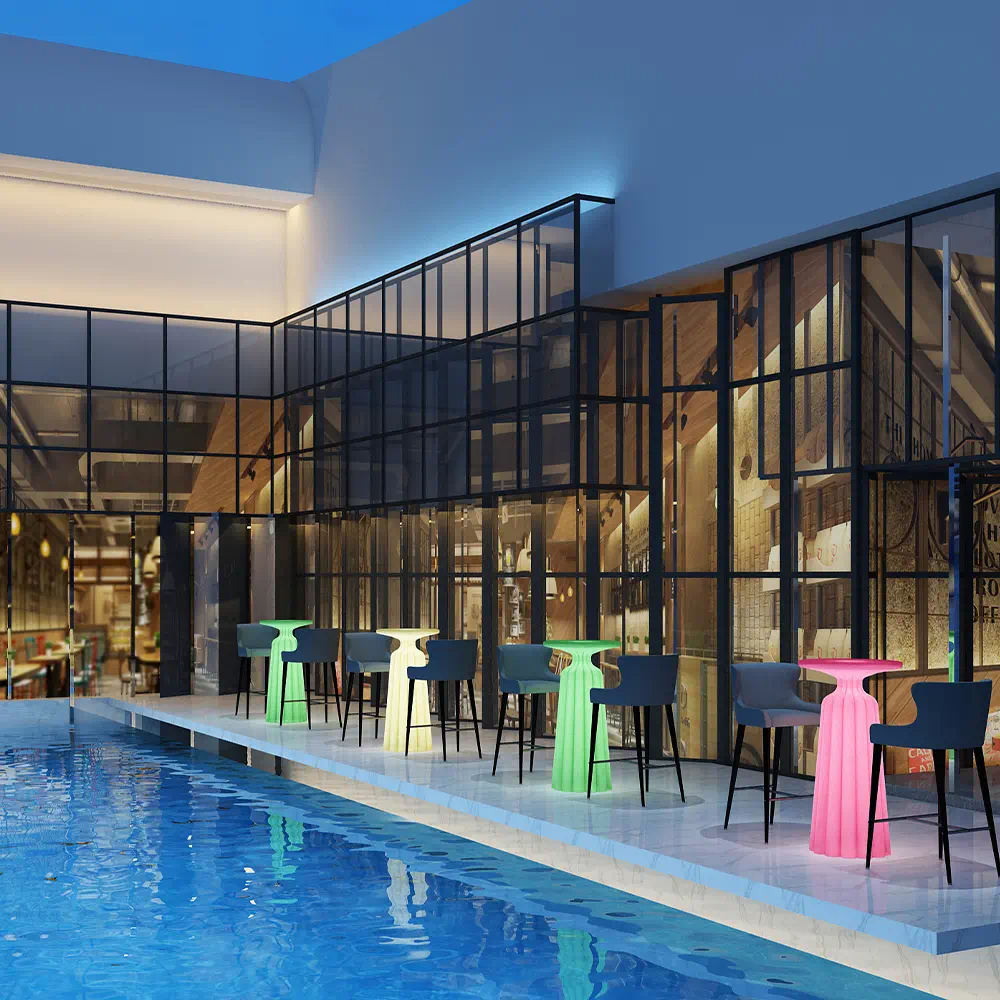
Case Study: Glowing Cocktail Table (Model C131B)
Technical Specifications:
| Parameter | Result |
| Size | 58cm x 58cm x H110cm (single piece) |
| Wall Thickness | 5mm uniform (thicker at corners) |
| Weight | Customizable 9.05kg (per client specs) |
| Material | UV-stabilized LLDPE |
| Durability | -20°C to 60°C, IP65 waterproof |
Mil Risas Process Advantages
Pre-molded LED channels formed during the rotation phase
Uniform wall thickness with natural reinforcement at corners
Custom weight control via precise powder loading ratios
Result: Single-piece LED furniture with integrated glow effects lasting multiple hours (varies by brightness and conditions).
FAQs
Q1: How long does a molding cycle take?
45–90 minutes for large LED furniture (industry standard).
Q2: Can you customize product weight?
Yes. We adjust powder ratios to meet your exact specifications.
Q3: What materials work best?
LLDPE (outdoor standard), HDPE, polycarbonate, UV/glow-stabilized formulations.
Q4: Why does rotomolding excel at complex LED shapes?
Biaxial rotation + gravity naturally handles undercuts and contours.
Ready for Signature Glow Furniture?
Continue our technical series:
Rotational Molding Materials →
Rotational Molding Mold Design →
Rotational Molding Post-Processing →
Rotational Molding Applications →